
Implant-Supported Dentures in Henderson, NV: Permanent Full-Arch Solutions Anchored in Bone
Full-arch tooth loss has a permanent solution in Henderson. Implant-supported dentures use titanium posts placed in your jawbone to anchor a complete set of teeth. We explain how titanium posts anchor a full arch and compare snap-in, fixed, and All-on-4 options to traditional dentures. You’ll learn how many implants you need, who qualifies, healing time, and 20-year results. Our credentialed Henderson team uses in-house CBCT imaging for full-arch restoration.
What are implant-supported dentures?
Implant-supported dentures replace a full arch of missing teeth using two to six titanium implants placed in the jawbone. The implants fuse with bone over three to six months, then anchor a custom denture. We confirm candidacy with an in-office CBCT scan before surgery.
Three core types:
- Snap-in (overdentures): You remove these nightly for cleaning
- Fixed full-arch: We screw these in; you clean them in your mouth like natural teeth
- All-on-4: Four angled implants per arch, often placed on the same day
Implant-Supported Dentures Anchor Full Arches With Titanium Posts Placed in the Jawbone
For Henderson adults with full tooth loss or failing bridges, this option rebuilds the entire arch from the bone up. Small titanium posts go into your jawbone to act as new tooth roots. Your bone fuses to each post over a few months. Once healed, your custom denture clips or screws onto those posts.
The result is a stable bite with no paste and no slipping. Because the implants stimulate your jaw, the bone stays strong, and your face keeps its shape over time.
Many Anthem and Sun City Anthem retirees come to us after years of traditional denture wear. By that point, the jawbone has often shrunk, and the lower plate feels loose. Eating, speaking, and smiling all get harder.
We use an in-office CBCT scan to measure your bone and plan each implant site. If you’re ready to see your numbers, book a CBCT imaging consult at our Green Valley office.
Fixed Implant Dentures and Snap-In Overdentures Serve Different Daily Routines
Both options sit on implants, but live in your mouth very differently. Fixed implant dentures stay in place all the time. Only your dentist removes them, and you brush them like natural teeth. They use four to six implants per arch.
Snap-in overdentures, also called snap-on dentures, clip onto two to four implants. You unclip them at night and pop them back in the morning. The bite is firm during the day, and cleaning is easy at the sink.
The right choice comes down to your daily life. Fixed feels permanent and stays put during meals, sleep, and travel. Snap-in trades that always-there feel for easier hygiene and fewer implants.
Many Green Valley and Whitney Ranch patients with arthritis prefer to skip the daily clipping step. Want to hold both styles before you decide? Schedule a side-by-side model consult, and we’ll show you both.
All-on-4 Belongs to the Implant-Supported Denture Family With a Four-Implant Protocol
In Henderson, “All-on-4” and “implant-supported dentures” often get treated as the same thing. They overlap but aren’t equal. Implant-supported dentures are the broader family. It covers two to six implants with a snap-in or fixed arch.
All-on-4 is one specific protocol within that family. It uses four implants per arch: two straight up front and two tilted toward the back. Tilting the back ones lets us anchor in thicker bone and skip the sinus.
That tilt gives you a real benefit. It often avoids bone grafting or sinus lifts, even when the back jaw is thin. Many All-on-4 cases also leave the office with a same-day temporary set of teeth.
We see Seven Hills patients with posterior bone loss qualify for All-on-4 without extra surgery. A CBCT scan tells us in minutes whether your bone supports the four-implant plan. Find out which protocol fits you at your imaging visit.
Implant-Supported Dentures Outperform Traditional Dentures on Chewing Power and Bone Health
If you wear traditional dentures, the trade-offs are familiar: weak bite, shifting fit, and tough foods off the menu. Implant-supported dentures restore 80 to 90 percent of natural bite force. Traditional dentures only restore about 20 to 25 percent.
That gap shows up at every meal. Steak, corn on the cob, and crisp apples come back on the menu. There’s no paste and no slipping when you laugh or talk.
The bigger win is bone health. Traditional dentures sit on the gums and let the underlying bone shrink year after year. Implants function like real roots and keep the bone active, which helps preserve your jaw shape and facial structure.
Henderson’s hard tap water and dry desert air break down denture adhesive faster than gentler climates. Many of our patients also report sore gums from a loose lower plate. If yours has stopped doing its job, talk with us about switching to implants.
Two to Six Implants Secure Most Full-Arch Denture Cases
Your implant count depends on the arch, your bone density, and the type of denture you want. For most Henderson patients, that lands between two and six per arch.
Here’s how the counts usually break down:
- Two implants: Lower snap-in for patients with limited bone
- Four implants: All-on-4, upper or lower
- Six implants: Fixed full-arch upper for stronger bite forces
Bone density and arch shape drive the final count. A dense lower jaw may need fewer posts. A thin upper arch often needs more to spread the load.
We see MacDonald Ranch and Inspirada patients come in with very different bone profiles. That’s why every plan starts with an in-house CBCT scan, not a guess.
The image shows where the bone is thick, thin, or missing. We map your implant count, angles, and surgical sites in one visit. Reserve your CBCT imaging slot for a custom number.
Well-Maintained Implant Dentures Stay Stable for 20 Years or Longer
The titanium implants themselves are built to last 20 years or more with daily care. The prosthetic teeth that sit on top wear down sooner. Most patients replace that denture portion every 10 to 15 years.
Daily care is simple but matters. Brush twice a day, floss with implant-safe tape, and use a water flosser. A loose feeling is never normal, so call us right away.
Henderson’s hard tap water leaves mineral buildup on implant parts and abutments faster than soft-water cities. We recommend running your Waterpik with filtered or bottled water at home. This small change protects your fittings and keeps the gum tissue healthy.
We keep our implant-denture patients on a recall schedule. Regular checkups catch worn parts and gum changes early, before they affect the fit. Join our maintenance recall plan when you complete treatment.
Get in Touch
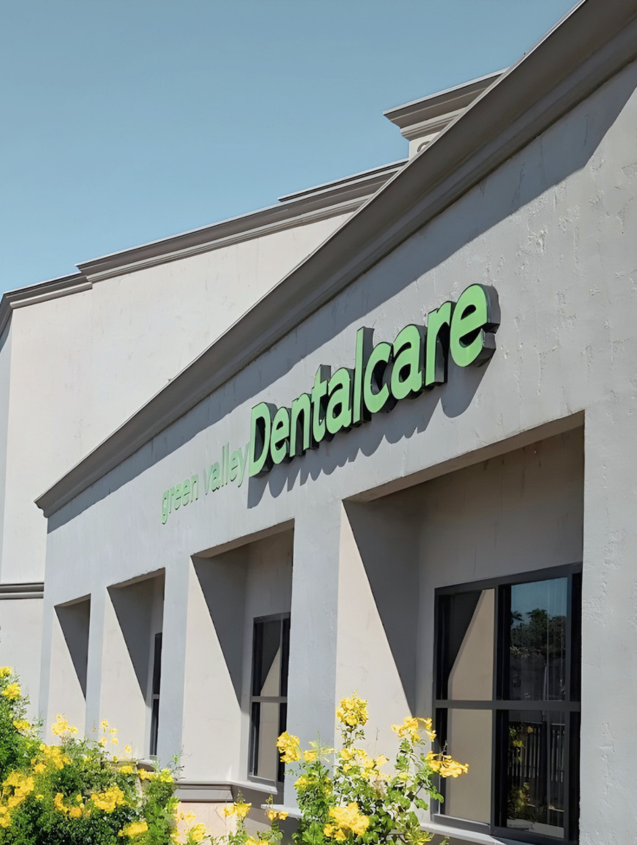
Taking the next step toward optimal oral health is easy. Our welcoming team at Green Valley Dentalcare is ready to schedule your appointment at a time that works best for you and your family. Plan your next visit with us and keep your smile healthy!
FAQS
Dental Care FAQ: Your Questions Answered
Can my implant-supported dentures come loose after placement?
Properly placed implants stay locked in bone. The clip-in or screw-in parts on top can wear out over time. Any wobble warrants a same-week visit to our Henderson office. We tighten the connection, replace worn parts, or re-fit your denture. Loose feel is always a fixable signal.
How many implants will I need for a full upper or lower arch?
Most patients need two to six implants per arch. The exact count depends on bone density, arch shape, and whether you choose snap-in or fixed. Two implants secure most lower snap-ins; four are common for All-on-4 cases; six are common for fixed upper arches. We confirm your number with an in-house CBCT scan during your Henderson consultation.
Will Medicare or my dental insurance help with implant-supported dentures?
Most Medicare Advantage and PPO dental plans cover portions of the surgical and prosthetic phases. Full medical Medicare typically does not. We verify your benefits before treatment starts so you see real numbers up front. Snap-in cases generally run $7,000 to $15,000 per arch; fixed and All-on-4 cases run $20,000 to $30,000+ per arch.
Am I a candidate if I've already lost significant jawbone?
Most patients with bone loss still qualify because modern protocols accommodate it. CBCT imaging shows exactly how much bone you have. Bone grafting, sinus lifts, or angled All-on-4 placement often resolve the gap. We confirm your candidacy in a single imaging visit at our Henderson office.
How long does the full process take from the first consultation to the final teeth?
Plan for three to nine months total, depending on healing time, grafting needs, and arch type. Osseointegration (bone fusing to the implant) takes three to six months on its own. All-on-4 patients often leave the first surgical visit with same-day temporary teeth. Final crowns or denture portions follow once healing is complete.
Where can I book an implant-supported denture consultation in Henderson?
You can book online or call our Green Valley office to start with a CBCT imaging visit. Your first appointment includes a full bone scan, candidacy review, and treatment options walk-through. Ask to see our before-and-after smile gallery to preview real results from Henderson patients.
You have different question?
Our team will answer all your questions. We ensure a quick response,